
What the instruments are made of.
Three tools, three materials: kansa, teak and copper. Each was chosen for a reason, and the reasons are older than the practice.
These are instruments used on the skin and in the mouth, with warm oil, every day, for years. What they are made of decides how they feel in the hand, how they age, and whether they are still in use a generation from now.
I use each of them in my own clinic. When I had them made, I was strict about the materials. It took weeks to be sure each one was done properly. This page sets out what they are.
Kansa is bell metal
Kansa is copper and tin, and nothing else. It is often called bronze, but it is not bronze in the modern sense. Bronze today carries about ten to twelve per cent tin, and often other metals as well. Kansa carries twenty-two.
At that proportion the metal changes character. It turns from reddish gold to a pale, almost silvery tone. It becomes harder. And it rings. Metalworkers call this bell metal, because it is the alloy from which temple bells and cymbals are cast.
The Kansa Foot Massage Wand and the Kansa Gua Sha are both cast in it.

78 to 22
The kansa I use is 78 per cent copper to 22 per cent tin, as confirmed by the makers in Gujarat. The figure is precise for a reason. Near that proportion, small changes in the tin alter how the metal sounds, how it wears and how it behaves under heat. The traditional ratio is the point at which it behaves as kansa should.
What the classical text asks for
The Rasatarangini of Pranacarya Sadananda Sharma gives the test for kansa that may be accepted:
Sunadam bhasvaram snigdham svetam mrdu ca nirmalam /
ghanagni-saham atyantam kamsyam grahyam ihocyate.
Kamsya that gives a pleasant sound when struck, that is bright, smooth, white, soft and clean, and that withstands hammer and fire exceedingly well, is here said to be acceptable.
Read closely, this is a buyer’s specification. Sound, colour, surface and endurance under hammer and fire are the same things a metalworker checks today to judge the metal without instruments. The tradition and the metallurgy arrive at the same place.
Teak
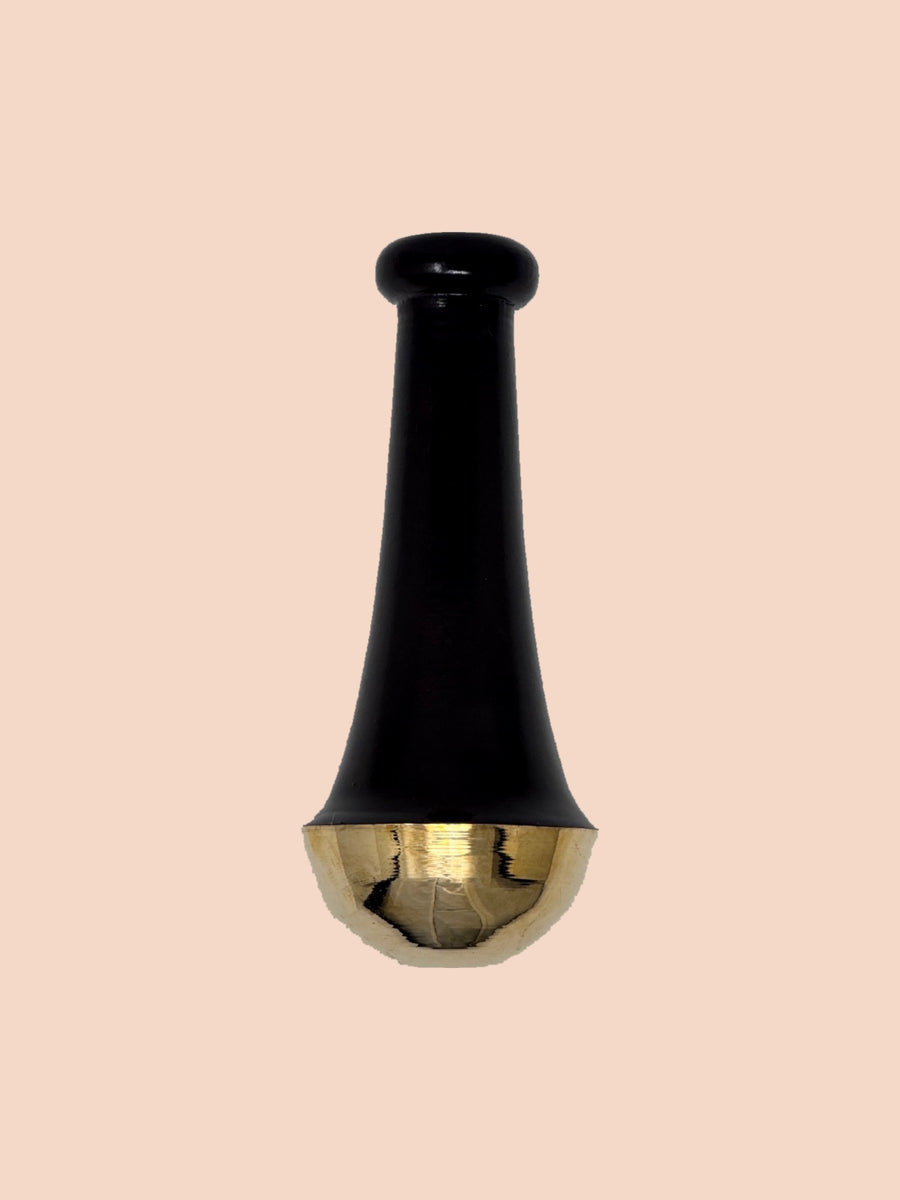
The handle of the Foot Massage Wand is solid teak. Teak carries its own natural oils and a trace of silica, which make it dense, hard-wearing and slow to take up moisture. It is the wood of boat decks for that reason.
A wand is used with warm oil, again and again. Many woods would absorb that oil, swell and work loose from the dome. Teak holds.
Copper
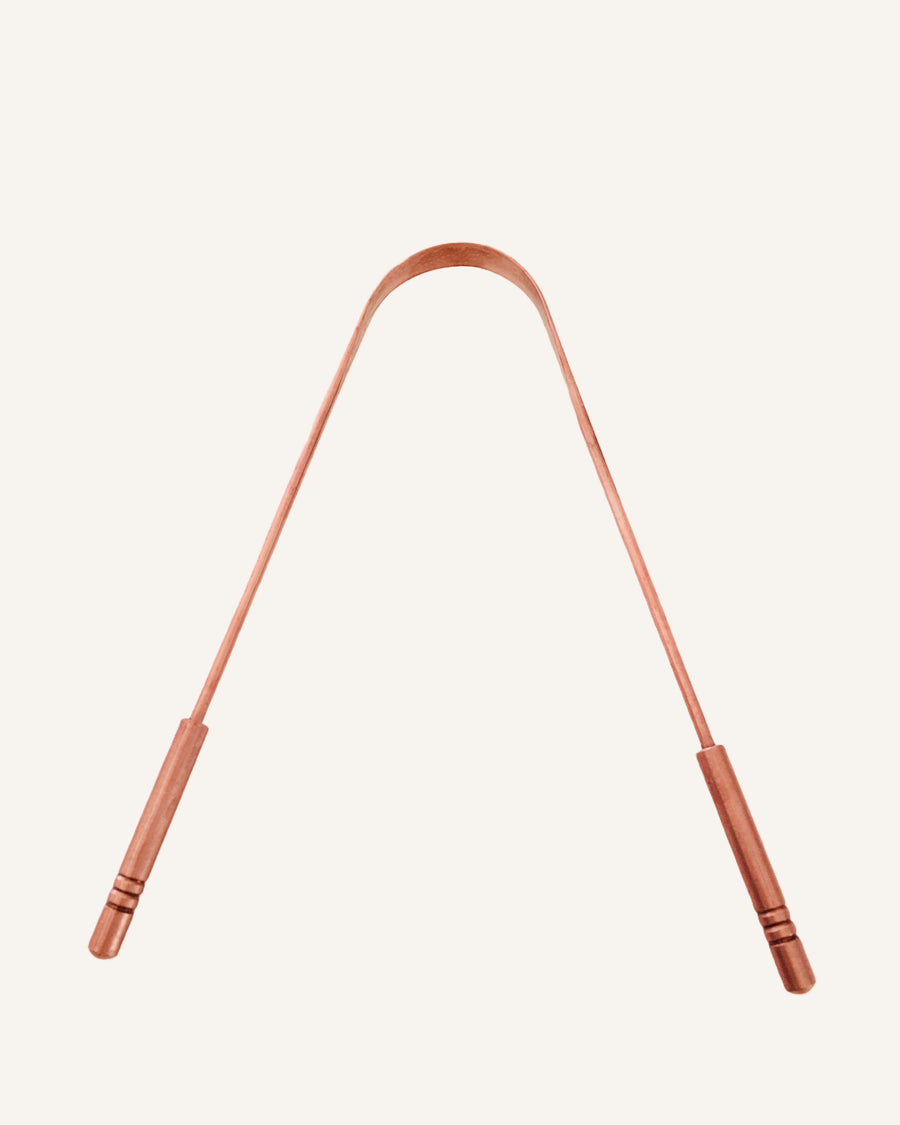
The tongue scraper is pure copper: solid, not plated, with no coating and no joins. Copper is naturally antimicrobial, and it is one of the metals Ayurveda has traditionally used for jihva nirlekhana, the morning scraping of the tongue.
Patina and care
Both metals darken with use. This is patina, not damage, and in classical practice it is left alone. During use, kansa may leave a faint grey tone on the skin. It is a natural reaction between the metal and the skin, and it wipes away.
To care for them: wipe or rinse after use, never soak, and dry fully before storing. To bring back the brightness, polish kansa with a little tamarind paste, or with lemon and a pinch of salt. Polish copper with half a lemon and a pinch of salt. Rinse and dry. Keep the teak handle dry between uses.
A note on sensitivity
If you have a known sensitivity to copper or to metals, please read the Medical Disclaimer before use.
Kansa, teak and copper are heirloom materials. With ordinary care, these are objects you keep for life.