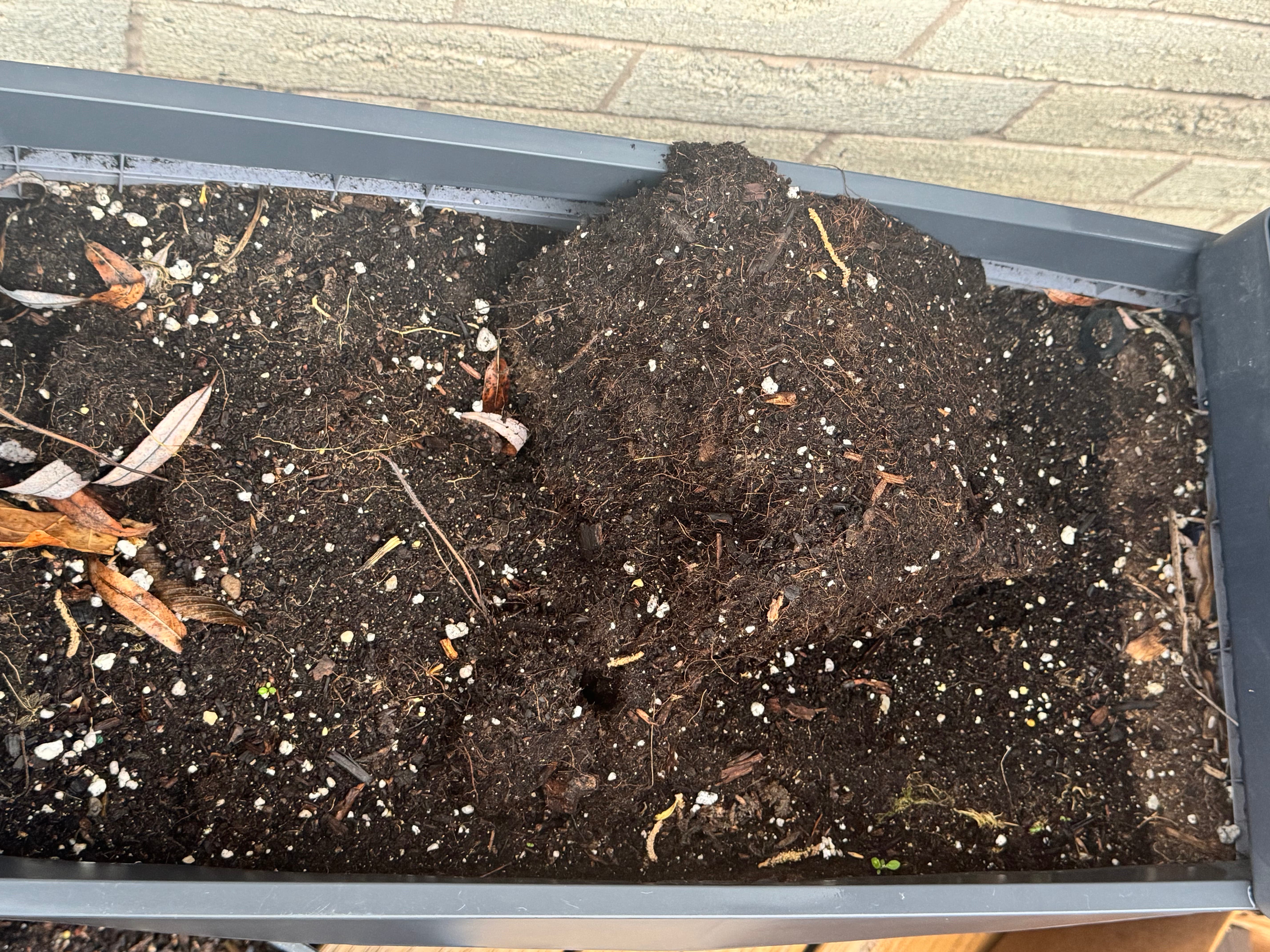
The bed is half-cleared by the time the sun has crossed the cedars at the back of the garden. Last fall's dried leaves are still in the corners, where the snow and the wind pushed them through the winter, and the soil shows that particular Ontario darkness that hasn't quite warmed through. The wind off the lake has been doing something all week — not the steady push of February, but a confused, gusting argument with the warming air. I push my hand into the bed. Cold to the wrist. The seedlings on the kitchen windowsill have another two weeks before they go in.
By the time I drive to the clinic the wind has died, and by the time the first patient sits down it has come back. May in Burlington is two seasons fighting in a single week. The body knows it before the calendar does.
In the ancient Ayurvedic texts, spring is Vasanta Ritu — the season when kapha, the cold and heavy and oily quality that has accumulated in the body across winter, begins to liquefy. The classical reading runs simply: what was solid melts, what has been held becomes available to leave, and the body — like the garden — needs loosening, lightening, clearing.
That reading was written for a different latitude. In southern Ontario the season does not behave so cleanly. Vasanta arrives in fits and starts and is already, by the first week of May, beginning to bleed into Grishma, the early summer that wants to follow. The body in this part of the world is asked to do something the classical texts do not quite anticipate: to hold the kapha-melt and the rising heat at once, sometimes within the same week, occasionally within the same morning.
The patient I see, in different bodies
This is the season I see the same patient, in different bodies. She comes in saying her face has been puffy in the mornings since March, that her sinuses have not quite cleared since the thaw, that there is an ear pain that comes and goes with the weather. She has been sleeping nine hours and waking heavy. The fatigue does not lift through the day. The weight she put on in February has not shifted. In the last two weeks, she tells me, she has begun to feel frustrated by the rain and the wind, by the slow business of spring not arriving cleanly, by her own body for failing to keep pace with the calendar. She mentions, almost in passing, that she has been thinking she would like to do a cleanse.
What she is describing, read against the classical frame, is three things at once. The congestion, the fatigue, and the unmoving weight are kapha doing what kapha does in spring — refusing to leave. The frustration is pitta arriving early, stirred by the variable warmth and by the body's own irritation at being held in a season that is itself refusing to commit. The wind that bothers her is vata, which has always been roused by inconsistency, and which the lake does not let us forget. She is being asked, in the same May week, to settle three doshas. The classical regimen for Vasanta — kapha-pacification, full stop — is not, by itself, what her body is asking for.
What the garden teaches
The garden offers the same instruction in plainer language. The bed cannot be planted on a calendar; it has to be read. Last frost in Burlington should have come and gone by now, by the textbook reckoning, but there was still frost on the bed in early May, and the calendar has been honest about very little this spring. The bed itself tells you when it is ready, and the bed is not ready when the air says so. It is ready when the soil holds warmth overnight, when the worms are working at four inches rather than ten, when the surface gives to a finger without resistance. Most years here, the gardeners I trust wait until the New Moon that falls just before Victoria Day; the long weekend is when the nurseries start to empty and the beds come into themselves. The decision of when to plant — and what to plant first — is a decision about reading conditions, not following a date.
The body's spring is no different. The textbook says spring is kapha; the reader who has only met that rule online — in a wellness course, in a blog post, in the half-translated remnants of someone else's Vasanta Ritu — can find herself applying it to a body that is no longer purely kapha by the first week of May, in a latitude the textbook never described, in a history the textbook has never read. The rule is not wrong. The rule is unread. The garden does not consult the textbook before it consults the bed; Ayurveda done well does not consult the textbook before it consults the body. It is the same work, twice over: conditions read carefully enough that the rule arrives in its own time.
The garden does not consult the textbook before it consults the bed; Ayurveda done well does not consult the textbook before it consults the body.
Practices, modified for the latitude
What I find myself recommending in May is not the textbook Vasanta regimen unmodified. The classical prescription opens with garshana — dry brushing with raw silk gloves before the morning bath — to liquefy and clear the kapha that has accumulated through winter. In southern Ontario it does not work that way. By the time May arrives, my patients have spent six or seven months under forced-air heating; their skin is dry, scaly, often itchy, and what they need first is oil, not friction. The snehana of winter — the warm-oil massages that soften and steady — carries over into the early weeks of spring before any drying practice belongs. The classical sequence is real; the latitude asks for an extra step at the front of it.
The rest of the kapha-pacifying register still applies. Bitter spring vegetables — asparagus, swiss chard, arugula — eaten before the heavier foods of the day. Raw honey, the only sweetener that does not deepen the kapha load, used unheated. An earlier rising hour, since dawn arrives now before six. Heavier foods come off the table — less dairy, less wheat, less of the slow-cooked one-pot meals that nourished the body through February.
But the picture also has to make room for what the season is starting to ask. A patient whose pitta is already rising will not be served by the more aggressive kapha treatments — the heating spices, the deep sweat therapies — that a textbook would prescribe in pure Vasanta. The wind-bothered, sleep-disturbed body needs vata-steadying as well: regularity, warmth where the air is still cold, a measured pace, fewer rather than more new commitments. The first principle of practising in this latitude is that the regimen has to bend with the weather.
The body asking for what spring is for
I think often, this time of year, of the patient who tells me she would like to do a cleanse. The instinct she is naming has its own classical name — Vasanta panchakarma, the spring-cleansing tradition that the ancient texts describe as the right work for this season specifically. She has read about cleanses; that topic is clear enough online. What has not been clear, online, are the symptoms that drove her to the cleanse in the first place. The fatigue and the unmoving weight have been read back to her as thyroid, as autoimmune, as something to test for. The sinuses and the ear pain have been read back as allergy, as mould, as something to investigate. By the time she arrives she has cross-referenced allopathic articles, naturopathic posts, search results, and an AI assistant or two, and she is carrying as much panic as instinct.
The body asked the question first. The internet held the knowledge but not the reading. The consultation room is where the reading happens — for this latitude, this season, this body. This is, in my practice, the most common point of arrival: the patient who feels the season turning in her tissues, who has been searching for the word her body has already chosen, who walks into the consultation room with the right question already half-formed.
The work, when she comes, is rarely the dramatic cleanse she has imagined. More often it is the patient unwinding of three doshas held at once: the kapha that has not left, the pitta arriving early, the vata that the wind keeps stirring. It is the same work the garden is doing. The bed has to be cleared before it can be planted, but it also has to be loosened, also has to be warmed, also has to be read. None of those operations happens on a date.
The seedlings on my kitchen windowsill have another two weeks. The wind off the lake has come back this evening. The body, like the bed, has not yet been planted. But the season is asking, and the work has begun.